Our pasta is only as good as our flour. That's why we partner with Shepherd's Grain — a farmer-owned network producing flour that meets, and beats, the strictest food safety standards in the world.
In Italy, flour is sacred. Hard wheat for pasta. Soft "00" for pizza. Heritage varieties grown for flavor, not yield. We hold our flour to that same standard — and we can prove it.
The Due' Cucina Promise
When you eat pasta at Due' Cucina, you're eating something we stake our name on. The semolina, the "00", the whole-wheat blends — every gram is traceable to the field it grew in. No anonymous commodity flour. No mystery supply chain. No shortcuts.
We promise three things, and we publish the proof: our flour comes from regenerative family farms, it is grown with limited synthetic inputs, and it is independently lab-tested every six months against the world's strictest residue limits.
Meet Shepherd's Grain
Founded in 2003, Shepherd's Grain isn't a brand bolted onto anonymous wheat — it's a farmer-owned cooperative built on a simple motto: Honest. Transparent. Quality-Focused. Every bag of their flour carries a lot code that traces back to the exact farm that grew the wheat.
Their wheat is identity-preserved — meaning it's never anonymously dumped into a commodity silo. From field to mill to Due' Cucina kitchen, the chain is unbroken. That kind of traceability is the norm in Italy. In the US, it's almost unheard of.
Farmer-Owned, Farmer-Run
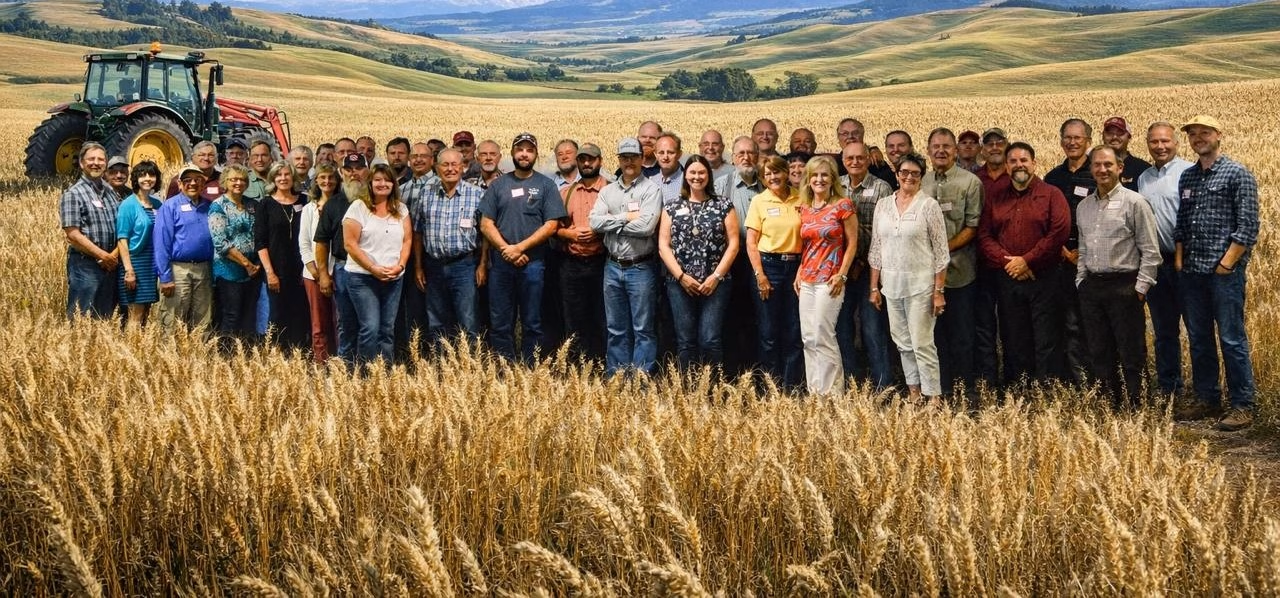
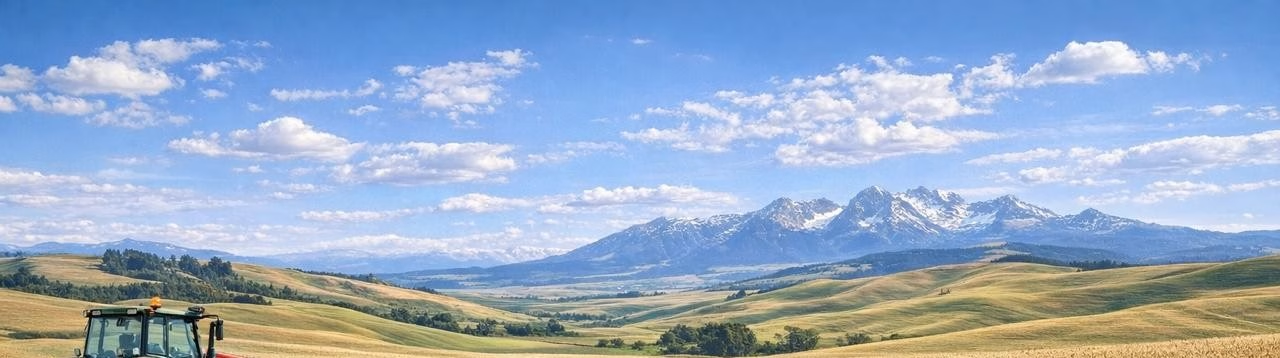
Shepherd's Grain is owned by the families who farm it. Not a fund. Not a multinational. Real growers in the Pacific Northwest and Canadian prairies, working land that's been in their families for generations.
That ownership matters. When farmers own the brand, they don't cut corners on the soil their kids will inherit. They don't spray indiscriminately. They don't switch to the highest-yielding hybrid just because a chemical company tells them to. They farm for the long game — and you taste it in every bite.
Family Farms
A network of multi-generational farms, not industrial monocultures.
Identity-Preserved
Every bag traceable by lot code to the farm of origin.
Fair Pricing
Farmers set prices that keep their land and families economically sustainable.
Heritage Wheat, Not Hybridized
Most American wheat today is heavily hybridized — bred over decades for maximum yield, dwarf stature, and chemical tolerance, often at the cost of flavor, nutrition, and digestibility. Many people who feel bloated, foggy, or just "off" after eating bread or pasta in the US are not celiac. They're reacting to industrial wheat.
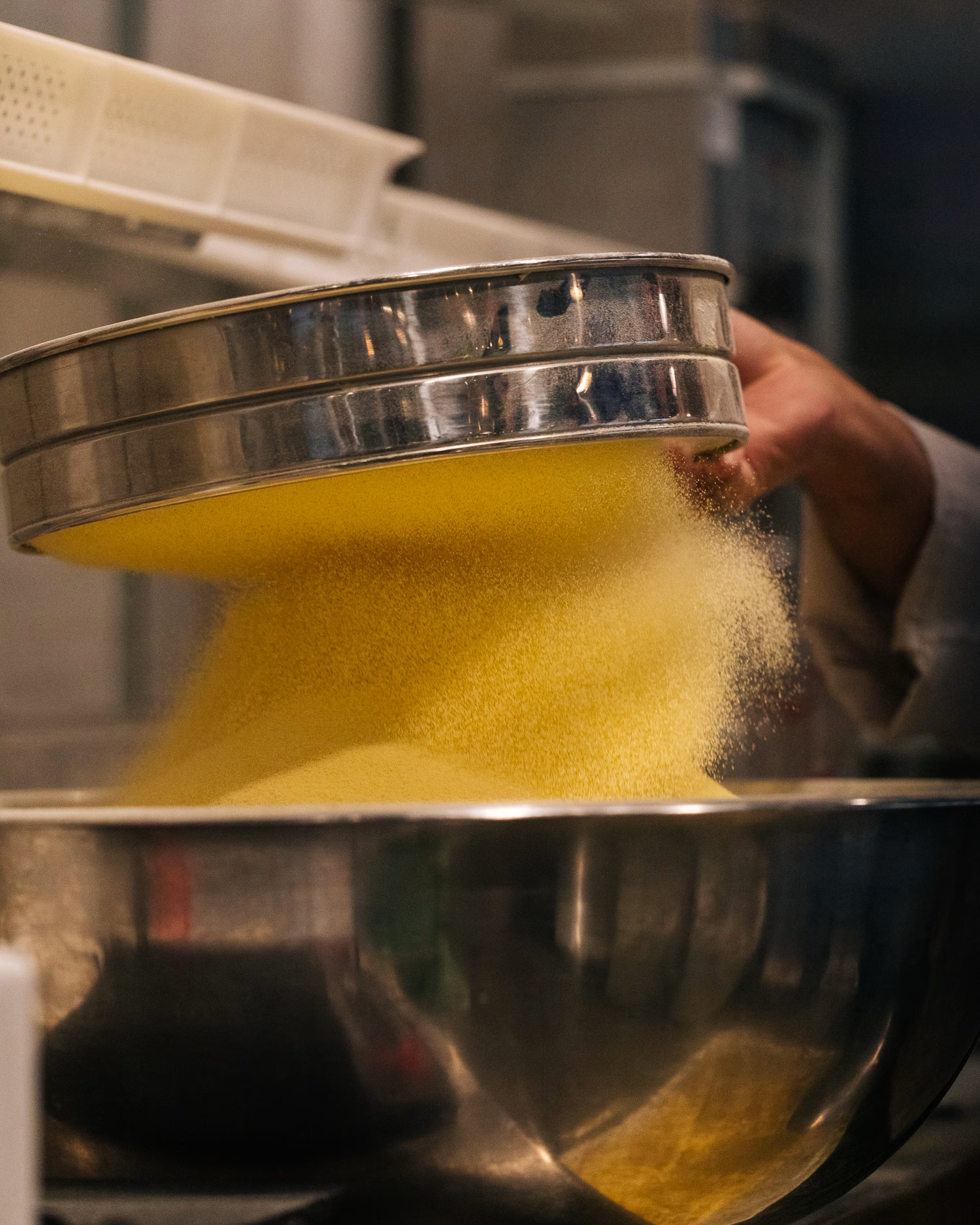
Shepherd's Grain selects wheat varieties for end-use quality — flavor, gluten structure, protein character — not just bushels per acre. Their durum semolina, hard reds, and "00"-style Napoletana flour use varieties chosen the way Italian millers choose theirs: for what they do in the bowl and on the plate.
"I'm not celiac, but I always felt heavy after pasta in the US. Eating Due' Cucina, I don't feel that anymore."
— A guest, last month
Our Pesticide Policy
The single biggest difference between Shepherd's Grain and conventional US flour is what's not in it. Their growers use integrated pest management — biological controls, crop rotation, beneficial insects, healthy soil — before ever reaching for a spray. When chemicals are necessary, they're a last resort, not a default.
Critically, Shepherd's Grain wheat is not desiccated with pre-harvest glyphosate — the controversial practice of spraying weed-killer on a wheat crop days before harvest to dry it out faster. That single practice is why glyphosate residue shows up in so many American grain products. We don't accept it.
No Pre-Harvest Spraying
Wheat is harvested when nature is ready — not chemically dried in the field.
Integrated Pest Management
Biology and ecology first. Synthetic chemistry only when truly necessary.
Lab Tests — Below EU Limits
Customers care about Italian flour because EU food safety standards are among the strictest in the world — often 10× to 100× lower than US limits for the same residue. So we test our flour against EU limits, not just US ones.
Below are the most recent independent results for our Shepherd's Grain flours. We commit to publishing fresh tests twice a year.
Compound
Glyphosate
Chlorpyrifos
Malathion
Deltamethrin
Cadmium (heavy metal)
DON (mycotoxin)
Our Result
< 0.05 mg/kg
Not detected
< 0.02 mg/kg
Not detected
0.04 mg/kg
0.18 mg/kg
EU Limit
10 mg/kg
0.01 mg/kg
8 mg/kg
1 mg/kg
0.10 mg/kg
0.75 mg/kg
US Limit
30 mg/kg
0.5 mg/kg
8 mg/kg
1 mg/kg
No federal limit
1.0 mg/kg
Compound
DON (mycotoxin)
Glyphosate
Deltamethrin
Malathion
Chlorpyrifos
Cadmium (heavy metal)
Our Result
< 0.05 mg/kg
Not detected
< 0.02 mg/kg
Not detected
0.04 mg/kg
0.18 mg/kg
EU Limit
10 mg/kg
0.01 mg/kg
0.75 mg/kg
8 mg/kg
0.10 mg/kg
1 mg/kg
US Limit
No federal limit
30 mg/kg
1.0 mg/kg
8 mg/kg
1 mg/kg
0.5 mg/kg
Compound
Glyphosate
Chlorpyrifos
DON (mycotoxin)
Deltamethrin
Cadmium (heavy metal)
Malathion
Our Result
< 0.05 mg/kg
< 0.02 mg/kg
Not detected
0.04 mg/kg
Not detected
0.18 mg/kg
EU Limit
10 mg/kg
0.75 mg/kg
1 mg/kg
0.10 mg/kg
0.01 mg/kg
8 mg/kg
US Limit
1.0 mg/kg
8 mg/kg
1 mg/kg
0.5 mg/kg
No federal limit
30 mg/kg
Independent third-party laboratory results. Most recent batch: MM/YYYY. Limits referenced from EU Regulation 396/2005 and US EPA tolerances (40 CFR 180).
Our Six-Month Commitment
We retest every batch of flour twice a year and publish the results here. If a number ever drifts above EU limits, we pull the lot. No exceptions.
Regenerative Agriculture
Conventional industrial farming depletes soil. Regenerative farming rebuilds it. Shepherd's Grain growers practice no-till cultivation, diversified crop rotations, and cover cropping — restoring nutrient cycles, water cycles, and biodiversity to land that monoculture farming had stripped bare.
The result: soil that holds carbon instead of releasing it, wheat with deeper nutrient density, and ecosystems that support pollinators, birds, and clean watersheds. It's farming the way your great-grandparents would recognize — but with the science to prove it works.
Healthier Soil
No-till keeps the microbiome alive.
Carbon Sequestered
Living roots pull CO₂ back into the ground.
Biodiversity
Crop rotations support pollinators and wildlife.
Why It Matters For You
This isn't an abstract sustainability story. It's about the people sitting at the table.
For your kids. Children's developing bodies are far more vulnerable to pesticide residue than adults. Lower exposure today means a healthier life tomorrow.
For the gluten-sensitive (but not celiac). Heritage, non-hybridized wheat is consistently easier to digest. Many guests who avoid pasta elsewhere eat ours without issue.
For anyone who cares what they eat. Clean food shouldn't be a luxury — it should be the baseline. With Shepherd's Grain, that baseline is finally here.
For the planet. Every plate of pasta you eat here is grown on land that's getting healthier, not poorer.
Certified, Verified, Independently Audited
Food Alliance Certified
Third-party verified standards for safe working conditions, humane animal treatment, and environmental stewardship across every farm and mill.
Salmon-Safe Certified
Farming practices that protect water quality, restore watershed health, and use integrated pest management instead of chemical-first approaches.
Non-GMO Project Verified
Every Shepherd's Grain flour is verified non-GMO — no genetically modified wheat, ever. Just real heritage varieties grown the way wheat was meant to grow.
Taste the Difference Yourself
The proof is on the plate. Come in for a bowl of fresh pasta made with Shepherd's Grain semolina — and let your senses be the final lab test.